If you've been watching listings in Everett expecting the construction cranes to eventually translate into more choices and softer prices for a two-family or triple-decker, the last twelve months should have told you something different. Downtown Everett's median sale price ran to $915,000 over the three months ending June 2026, up 8.9 percent from the same period a year earlier. Citywide, the picture is calmer but still tight: a median of $680,000 with only 14 sales recorded in March 2026, thin enough that a single closing can move the number. Meanwhile, roughly 1,900 brand-new apartment units have opened a short walk from those same streets, with hundreds more under construction. The building boom is real. It just isn't the boom that relieves pressure on the market where most buyers here are actually shopping.
That gap is the story worth understanding before you make an offer.
The numbers don't agree, and that's the point
Different data sources are telling slightly different versions of the same story, and the disagreement itself is informative. One tracker put Everett's July 2026 median sale price at $612,400, with homes taking a median of 49 days to sell, up from 33 days the year before, on a sample of 38 sales. Another source's citywide figures for the same general window show homes moving in about 18 days on average, based on a pool of just 14 transactions in March. A third estimate places the average home value at $643,199, up a modest 1.4 percent year over year.
None of these numbers are wrong. They're measuring a market so thin that the answer changes depending on which weeks you catch and which properties happen to close. Here's how the two clearest data points compare:
| Metric | Citywide Everett | Downtown Everett |
|---|---|---|
| Median sale price | $680,000 (3 mo. ending March 2026), down 1.1% YoY | $915,000 (3 mo. ending June 2026), up 8.9% YoY |
| Price per square foot | $429, up 5.8% YoY | $304, down 19.0% YoY |
| Homes sold in the period | 14 | 8 |
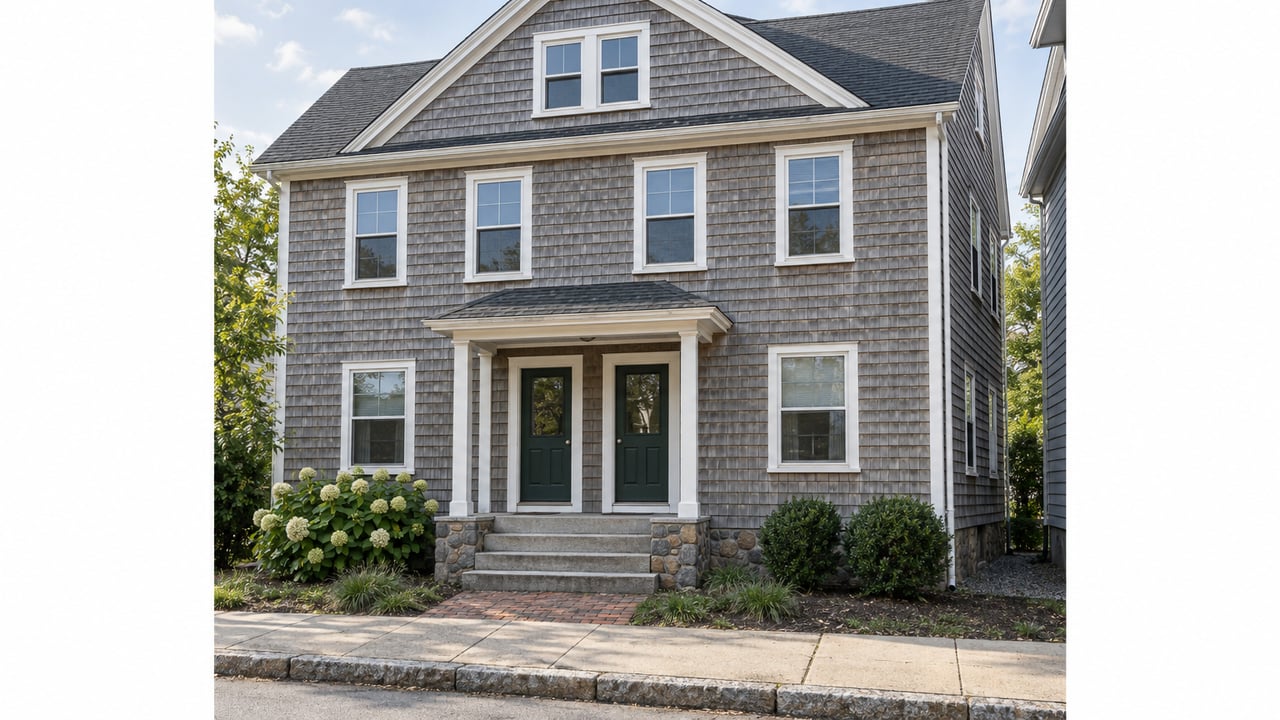
Notice what doesn't move: sales volume. Whether you're looking citywide or at the downtown core, the number of closings each month sits in the single or low double digits. That's not a market correcting itself. That's a market where the supply of the kind of property most buyers here actually want, an existing two- or three-family on its own lot, simply isn't growing, no matter what else gets built around it.
What's actually going up, and who it's for
Everett has permitted more than 1,500 new homes over the last five years, and the pace hasn't slowed. But almost none of that pipeline is for-sale product aimed at the buyer comparing a two-family in Everett to one in Chelsea or Malden. It's institutional rental housing, concentrated in one rezoned district, built for renters:
- Greystar's Jade and Juniper, a two-phase development at 1690 Revere Beach Parkway, totals 741 units (325 in Jade, 416 in Juniper) as part of a broader roughly $875 million investment across five Greystar properties in the neighborhood, more than 1,900 units in all. Juniper topped out in early 2026 and was slated for completion by the end of the year.
- A.W. Perry's 273-unit mixed-use project along the Second Street corridor, inside the city's Commercial Triangle District, broke ground in early 2026.
- The Davis Cos.' proposed Docklands Innovation District, a 7.2-million-square-foot plan on the former ExxonMobil fuel storage site, would add roughly 3,200 housing units alongside commercial space and an energy storage facility. It's still in the community-meeting stage, without state or local approval secured, so it belongs in your long-range thinking, not your current comparables.
Every one of these is a rental building. None of it is a two-family or triple-decker for sale on an individual lot, which is the product that actually competes for a buyer's dollar in Everett's owner-occupant and small-investor market.
Why the zoning explains the gap
The reason all this construction lands in one place has a specific origin. In 2018, a year before Wynn Resorts' Encore Boston Harbor opened along the Mystic River, city officials rezoned the roughly 100-acre Commercial Triangle to allow seven-story mixed-use buildings as of right, no variance process required. According to reporting in the Boston Globe, that single change is why developers can move so fast here. Matt Lattanzi, the city's planning and development director, described projects like Greystar's 700-plus-unit developments getting fully permitted by the Planning Board in two to three months, with total entitlement time from introduction to approval running about four months. He credited a one-table review system, where department heads from fire, police, engineering and planning meet with developers before any public hearing, for avoiding the drawn-out revision cycles that slow projects in neighboring cities.
That speed is a genuine advantage for large-scale rental construction. It is also confined, almost entirely, to that one rezoned district. The two- and three-family houses scattered across Everett's residential streets are conveyed one lot at a time, financed conventionally or through small-portfolio lenders, and permitted under ordinary residential rules. The zoning change that made the Commercial Triangle move fast for towers did nothing to speed up, or add to, the supply of the product most home buyers here are actually chasing.
Why rents keep the resale math working in an investor's favor
The apartment boom isn't neutral for the two-family market. It's actively supporting it, just not the way new supply usually does.
A Greystar executive overseeing the development described the underlying logic in an industry interview: living a mile closer to Boston can cost 60 percent more, rents at that distance are largely unaffordable for the renter Greystar is targeting, and that demographic skews older and higher-income. Everett, by contrast, is where the company is building for younger professionals who want transit access without paying downtown Boston rent. Leasing at Greystar's four completed buildings was running near 83 percent as of the most recent reporting, which tells you that demand for new, amenity-heavy rentals in Everett is strong and growing.
That demand doesn't come from the same pool of renters who'd otherwise be living in an existing triple-decker unit. It's a separate, newer segment, drawn partly by Encore Boston Harbor's continued pull and partly by public transit investment: a planned Silver Line expansion through Everett with multiple stops, and a pedestrian bridge linking Assembly Row in Somerville to Encore. Neither project is finished, so treat them as directional rather than settled. But together they've pushed general rent levels upward across the neighborhood, and that rise shows up directly in what an investor can underwrite when pricing an existing two- or three-family. Higher achievable rent supports a higher purchase price, which is a big part of why per-square-foot pricing in the neighborhoods closest to downtown kept climbing even as thousands of brand-new units opened nearby.
What this actually means if you're shopping here
If you're an owner-occupant buyer hoping the Commercial Triangle's apartment boom eventually shows up as more two-family listings, it won't, at least not from this pipeline. Those units are long-term leases inside a district zoned and built specifically for rental housing. The Docklands project on the old ExxonMobil site is the one development that could someday add meaningful housing supply outside that rental-only pattern, but it's still working through community meetings without approvals in hand, which puts any effect years out.
If you're a small investor evaluating a two-family, the math has shifted under your feet even if the sale price looks similar to what you researched last year. The achievable rent on an existing unit is being pulled upward by the same forces building those new towers, which means the numbers that made sense on a comparable purchase two or three years ago may no longer reflect what the unit can actually command today. That's worth running fresh, not assuming.
Either way, the headline about Everett's construction boom and the headline about its two-family market are two different stories happening a few blocks apart. Reading one as evidence for the other is the mistake worth avoiding before you write an offer.
Frequently asked questions
Will the Docklands project on the old ExxonMobil site affect prices soon? Not on any near-term timeline. The Davis Cos. was still meeting with community groups and hadn't secured state or local approval for the 3,200-unit plan as of the most recent reporting, so it isn't a factor in today's comparables.
Does more apartment construction usually bring home prices down eventually? It can, when the new supply competes directly with existing housing stock. In Everett's case, the new construction sits almost entirely inside one rezoned rental district built for a different renter profile than the city's existing two- and three-family homes, so the two markets aren't yet drawing from the same pool of buyers or renters.
If you're trying to figure out what a specific two-family, triple-decker, or investment property in Everett is actually worth against this backdrop, not what a citywide average suggests, Coldwell Banker First Quality Realty can walk through the comparable sales that apply to your property type and street, not just the headline number.